Everbearing vs. Alpine strawberries in rail troughs
Strawberries have fibrous root balls that sit comfortably within a 15-to-20-centimetre deep trough, making them the ideal candidate for inward-facing balcony railing boxes or tiered ladder steps. However, choosing the wrong type of strawberry limits your harvest to a single two-week window in June.
For a small space, bypass traditional June-bearing field varieties and plant everbearing (day-neutral) cultivars such as 'Mara des Bois', 'Albion', or 'Finesse'. These initiate flower buds regardless of day length, delivering intermittent bowls of aromatic fruit from early June right through to the first October frosts. Snip off long trailing stolons (runners) as soon as they appear so the mother crown directs all its energy into berry production rather than vegetative cloning.
If your balcony faces north or east and receives fewer than three hours of direct sunlight, plant woodland alpine strawberries (*Fragaria vesca* 'Alexandria' or 'Yellow Wonder'). Evolved for dappled forest floors, alpine strawberries never send out invasive runners, tolerate cool shade, and produce jewel-like, intensely perfumed berries for five months straight.
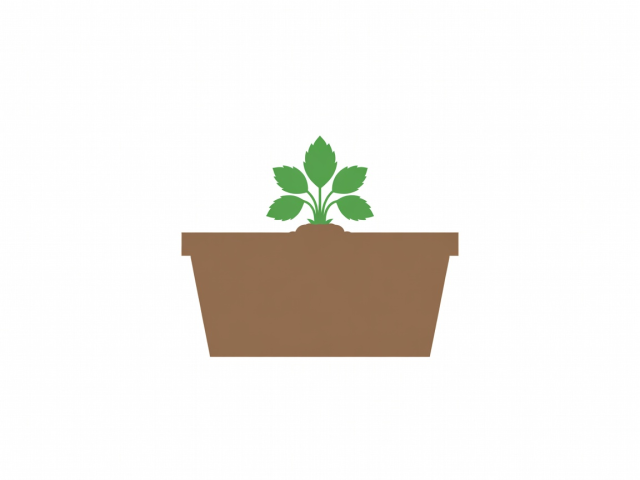
Fig 4.1 — Crown depth precision: bury roots vertically while keeping the central crown node flush with the compost surface; burying the crown causes rot, while exposing roots dries the plant.
Blueberries, thornless cane fruit, and the acidic water rule
Compact blueberries are exceptional balcony shrubs, offering white spring lantern blossoms, dusty blue summer harvests, and fiery crimson autumn foliage. Lowbush and half-high hybrids such as 'Top Hat' (reaching just 50 cm tall), 'Sunshine Blue', and 'Jelly Bean' thrive for a decade in a 35-to-40-litre square tub—provided you respect their strict soil chemistry.
Blueberries lack ordinary root hairs and rely on ericoid mycorrhizal fungi that only function in acidic soil between pH 4.5 and 5.5. Fill their container exclusively with peat-free ericaceous compost (based on composted pine bark and coir). Crucially, hard municipal tap water contains dissolved calcium carbonate that gradually raises soil pH, turning blueberry leaves yellow (lime-induced chlorosis). Collect rainwater in a balcony butt or neutralize tap water by adding half a teaspoon of citric acid or white vinegar per 5-litre watering can once a month.
For growers in hard-water areas who prefer standard potting compost, new-generation genetic dwarf cane fruits—such as thornless dwarf raspberry 'Ruby Beauty' (100 cm tall) and compact thornless blackberry 'Baby Cakes'—fruit prolifically on compact canes without scratching passers-by in narrow balcony walkways.
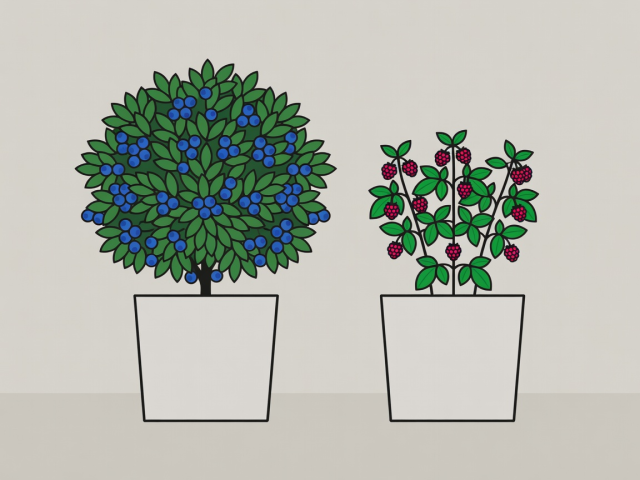
Fig 4.2 — Compact bush architecture: 'Top Hat' blueberry (50 cm) in pine-bark ericaceous substrate alongside 'Ruby Beauty' dwarf raspberry (100 cm) requiring zero trellis wires.
Compact Balcony Fruit Specifications & Pollination Needs
Review container sizes, pollination compatibility, and winter pruning schedules before investing in perennial fruit stock.
| Fruit Type | Balcony Cultivar | Min. Pot Volume | Pollination Status | Soil & Water Requirement |
|---|---|---|---|---|
| Everbearing Strawberry | 'Mara des Bois', 'Albion' | 3–4 L per plant (18 cm deep) | Self-fertile (Wind/Insect) | Rich multi-purpose + 20% perlite; tuck straw or wool mat under berries |
| Woodland Alpine Strawberry | 'Alexandria', 'Baron Solemacher' | 2.5 L per plant (15 cm deep) | Self-fertile (Shade tolerant) | Moist woodland humus mix; thrives on east/north ledges |
| Dwarf Patio Blueberry | 'Top Hat', 'Sunshine Blue' | 30–40 L square tub | Partial self-fertile (Higher yield with 2 varieties) | Strict ericaceous compost (pH 4.5–5.5); rainwater only |
| Dwarf Short-Cane Raspberry | 'Ruby Beauty' (Floricanes), 'Little Sweet Sister' | 30–35 L tub | Self-fertile | Loam-based John Innes No. 3 + composted bark; free-draining |
| Compact Dwarf Fig | 'Little Miss Figgy', 'Brown Turkey' | 35–45 L sturdy cube | Parthenocarpic (No wasp needed) | Restricted pot deliberately bounds roots to force heavy fig set |
| Patio Dwarf Citrus (Summer out / Winter in) | Calamondin (*Citrus × microcarpa*), 'Meyer' Lemon | 25–35 L pot on castors | Self-fertile (Hand-brush indoors) | Gritty citrus medium; bring indoors before frost (< 5 °C) |
Why figs love confined balcony pots and winter care
Unlike vegetables that sulk when their roots touch container walls, the common fig (*Ficus carica*) actually fruits far more heavily when its root run is tightly restricted in a 35-to-40-litre pot than when planted in open ground. Left unrestricted, figs channel their vigour into huge leaves and long branches; confined inside a sturdy square balcony tub along a warm south- or west-facing brick wall, the tree slows its vegetative growth and initiates dozens of embryonic figs along the leaf axils.
Choose 'Little Miss Figgy'—a natural dwarf mutation of 'Violette de Bordeaux' that grows to just 120 centimetres tall with deeply lobed leaves and rich burgundy flesh. In cool temperate climates, figs carry tiny pea-sized embryo fruits safely through the winter at the tips of bare branches to ripen the following August. Wrap the container itself in breathable jute sacking during severe January freezes so the outer feeder roots do not freeze solid.
Bird Protection & Hand Pollination Tips
Growing fruit four storeys above street level changes how wildlife interacts with your crops:
- Urban Pigeons & Blackbirds: Pigeons rarely land on narrow pots, but blackbirds and magpies quickly spot reddening strawberries. Stretch taut black square-mesh netting over short bamboo canes pushed into corner holes of your square troughs.
- High-Floor Bee Scarcity: If your balcony sits above the 6th floor or experiences strong crosswinds during April blossom week, keep a clean, soft artist's watercolour brush by the door. Spend two minutes at midday lightly dusting pollen from flower to flower on blueberries and strawberries to guarantee full, symmetrical berry swell.