Why crowded nursery pots fail within two weeks
Most first-time balcony growers begin by purchasing a lush green pot of sweet basil or flat-leaf parsley from a grocery store aisle, placing it on a sunny sill, and watching the stems blacken at the base ten days later. That pot is not a single healthy plant; it is an industrial plug containing 30 to 45 seedlings sown tightly together to create an instant display under artificial lights.
Left unseparated in a tiny 9-centimetre plastic sleeve, those forty root systems compete fiercely for oxygen and water. To turn a supermarket herb pot into a three-month balcony supply, soak the root ball in a bowl of lukewarm water for ten minutes, gently tease the tangled roots apart into clusters of three or four stems, and repot each cluster into a 20-centimetre deep square container filled with peat-free multi-purpose compost mixed with 15% perlite.
Keep freshly divided basil plants out of scorching midday beams for seventy-two hours while feeder roots re-anchor, then move them into your warmest, wind-sheltered spot. Never water basil leaves late in the evening; cool damp foliage invites downy mildew (*Peronospora belbahrii*) overnight.
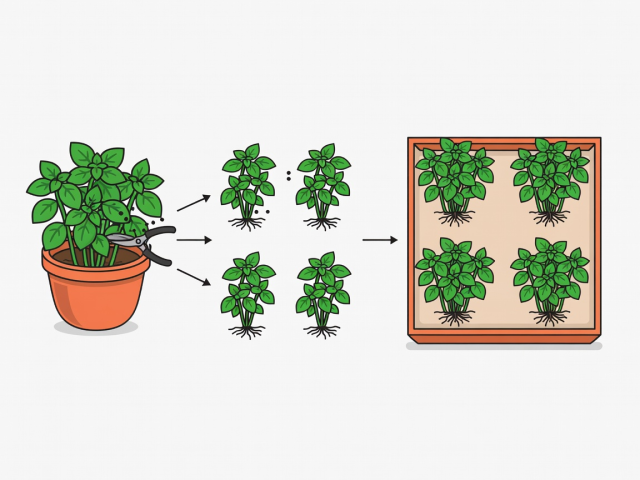
Fig 2.1 — Teasing a crowded 40-stem supermarket pot into four spaced groups gives each root crown roughly 3 litres of aerated substrate.
Separating Mediterranean scrub from leafy annuals
Mixed herb troughs often look appealing on planting day, yet combining incompatible species is the second leading cause of container losses. Culinary herbs fall into two distinct ecological guilds: soft-stemmed annuals/biennials originating from moist alluvial riverbanks or woodland margins, and woody perennials native to rocky limestone hillsides around the Mediterranean basin.
Woody herbs—including rosemary (*Salvia rosmarinus*), lemon thyme (*Thymus citriodorus*), Greek oregano (*Origanum vulgare* subsp. *hirtum*), and winter savory—possess fine, wiry roots adapted to fast-draining scree. Their essential oil concentration actually intensifies when the substrate dries almost completely between waterings. Mix 30% horticultural grit or coarse washed sand into their compost.
Conversely, soft leafy herbs—flat-leaf parsley (*Petroselinum crispum* var. *neapolitanum*), coriander (*Coriandrum sativum*), chervil, and dill—respond to dry soil by triggering an emergency survival response: bolting rapidly upward into flower and shutting down tender leaf production. House these in deeper, moisture-retentive troughs positioned where afternoon shade slows evaporation.
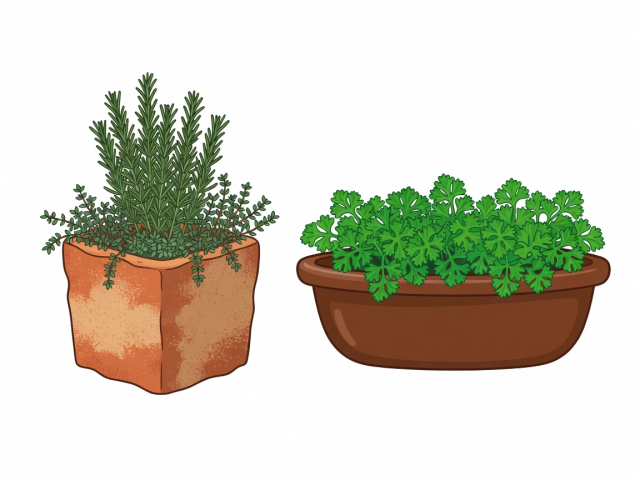
Fig 2.2 — Left: 70/30 compost-to-grit blend for woody rosemary and thyme. Right: Moisture-retentive coir-and-bark mix for deep parsley taproots.
Container Depth & Exposure Reference for Twelve Kitchen Herbs
Use this matrix to match your balcony's daily hours of direct sunlight and spare pot dimensions to reliable culinary cultivars vetted by Royal Horticultural Society (RHS) container trials.
| Herb & Cultivar | Min. Pot Depth | Direct Sun Needed | Soil Mix Profile | Correct Harvest Technique |
|---|---|---|---|---|
| Genovese & Greek Bush Basil ('Minette') | 18–20 cm | 5–7 hours (Warm) | Rich compost + 15% perlite; keep evenly moist | Pinch central shoot tip 5 mm above a pair of side buds; never strip bare lower leaves |
| Flat-Leaf Italian Parsley ('Gigante di Napoli') | 25 cm (Taproot) | 3–5 hours (East/West) | Deep moisture-retentive loam-based mix | Cut outermost mature stalks low at the crown base; leave central unfurling heart untouched |
| Slow-Bolt Coriander ('Calypso' or 'Leisure') | 20–25 cm | 3–4 hours (Cool sun) | Moist, cool root run; direct sow in final pot | Snip outer stems once 15 cm tall; sow small replacement batches every 3 weeks |
| Common & Garlic Chives (*Allium schoenoprasum*) | 15–18 cm | 3–6 hours | Standard potting mix; tolerates damp shade | Shear blades cleanly 4 cm above soil level; divide congested bulb clumps every 2nd spring |
| Moroccan Spearmint (*Mentha spicata* 'Moroccan') | 20 cm (Solo pot) | 2–5 hours | Rich compost; heavy summer drinker | Cut whole leafy stems down to two nodes above soil to trigger fresh basal shoots |
| Prostrate Rosemary ('Prostratus' or 'Miss Jessopp') | 25–30 cm | 6+ hours | 70% John Innes No. 2 + 30% sharp grit | Snip pliable green current-season tips; never cut back into bare dark brown old wood |
| Common & Lemon Thyme ('Silver Posie') | 15–20 cm | 6+ hours | Free-draining gritty mix; drought tolerant | Trim up to one-third of leafy shoots before and after summer flowering to prevent legginess |
| Greek Oregano (*Origanum vulgare* subsp. *hirtum*) | 20 cm | 5–8 hours | Lean gritty substrate; minimal fertilizer | Harvest stems just as flower buds form when thymol and carvacrol oil levels peak |
| Purple & Broadleaf Sage ('Purpurascens') | 25 cm | 5–7 hours | Well-drained loam mix; keep dry in winter | Pick individual velvety leaves sparingly in year one; prune lightly in late April |
| French Tarragon (*Artemisia dracunculus* 'Sativa') | 25 cm | 5–6 hours | Sharp drainage; shelter from cold winter wet | Snip tender branch tips every fortnight from May to September; overwinter against warm wall |
Preventing coriander bolting and wintering perennials
Coriander frustrates many urban growers because it resents root disturbance. Buying a pot-bound nursery plant and transplanting it onto a hot balcony triggers immediate flowering. Instead, sow seeds directly into a 22-centimetre trough in April or late August, spacing seeds 4 centimetres apart. Choose slow-bolt cultivars like 'Calypso', which gives up to three weeks longer leaf cutting than standard strains.
When autumn arrives in October, soft annuals like sweet basil finish their life cycle as night temperatures dip below 8 °C. Harvest remaining basil leaves to blend with olive oil and freeze in ice-cube trays. Meanwhile, perennial chives die back into dormant underground bulbs that sprout automatically in February, while woody thyme, sage, and rosemary remain evergreen for winter roasts provided their pots sit elevated on square pot feet so icy rain drains freely.
Three-Pot Balcony Herb Starter Kit
If your balcony only has floor space for three 25 cm square containers along one side wall, assemble this culinary trio:
- The Morning Shade Box: Half flat-leaf parsley, half common chives. Both thrive in cooler east-facing light and regrow cleanly from basal cuts.
- The Dedicated Mint Cube: One vigorous root ball of Moroccan mint kept strictly isolated so its horizontal stolons remain contained, yielding fresh tea and salad leaves from April to November.
- The Sun-Baked Grit Pot: An upright rosemary paired with trailing lemon thyme cascading over the square rim, placed in your brightest, windiest corner.